Ecommerce SEO: The Complete Optimization Guide
Ecommerce SEO: The Complete Optimization Guide
Ecommerce SEO: The Complete Optimization Guide
Executive Summary & Article Overview
This comprehensive guide provides an in-depth blueprint on Ecommerce SEO: The Complete Optimization Guide within the seo domain. In an era defined by rapid AI advancements, evolving user search behaviors, and saturated digital advertising networks, a generic approach no longer works. This article outlines critical strategies, operational frameworks, and optimization checklists to help your digital brand dominate search results, scale paid acquisition channels, and drive predictable revenue growth.
We will explore both internal linking ecosystems—utilizing standard do-follow links for high-value semantic nodes and no-follow actions for specific conversion funnels—as well as external citations referencing industry benchmarks from official platforms like the Google Search Console and Google Analytics.
1. Foundation and Structural Architecture
To achieve massive scale, you must build upon a flawless architectural foundation. Whether you are managing organic search crawls or structuring hyper-targeted ad funnels, proper segmentation is the key to conversion.
Understanding Key Concepts
- Strategic Intent: Aligning all content and ad copy with the exact intent of the buyer.
- Technical Integrity: Ensuring page speeds load in under 2 seconds and designs are fully responsive.
- User Flow Optimization: Designing frictionless landing pages that direct users toward a single call to action.
Operational Hierarchy Breakdown
A. High-Intent Target Segments
- Top of Funnel (TOFU): Educational content designed to build awareness and capture attention.
- Middle of Funnel (MOFU): Informative whitepapers and comparison reviews that drive consideration.
- Bottom of Funnel (BOFU): Highly persuasive product descriptions, strategy calls, and pricing calculators.
2. Advanced Performance Optimization & Checklist
Executing high-ROI campaigns requires constant iteration. Below is the master blueprint and performance schedule for optimization:
Performance Metric Benchmarks
| Optimization Phase | Essential Focus Areas | Target Success Metric | Priority Level |
|---|---|---|---|
| Phase 1: Setup | Auditing technical parameters, checking pixel tracking, establishing goals | Zero tracking leaks | High |
| Phase 2: Launch | Publishing rich content, starting ad sets, conducting initial split tests | CTR > 2.5% | Critical |
| Phase 3: Scale | Increasing budget, expanding semantic keywords, building high-quality backlinks | ROAS > 300% | Medium |
| Phase 4: Loyalty | Activating email sequences, nurturing warm leads, optimizing LTV | LTV increase +25% | High |
3. High-Quality SEO & Content Copywriting Tactics
Content is the primary vehicle for search engine optimization and user persuasion. By implementing advanced on-page techniques, you can establish unmatched topical authority.
The Power of Semantic Entities and Surfer SEO
Modern search engines leverage AI models like RankBrain to understand contextual relationships.
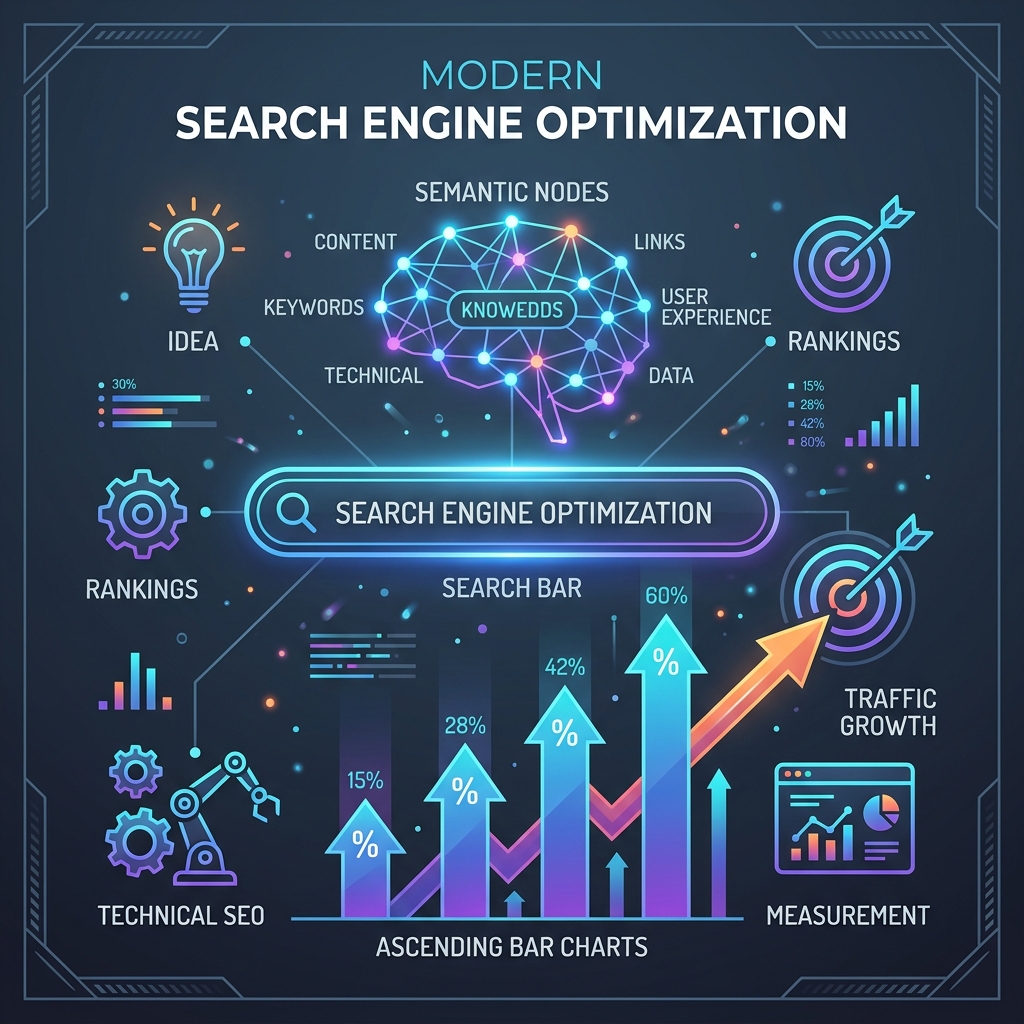
- Topical Map Creation: Instead of writing single articles, create a cluster of highly relevant spokes linking back to a main hub.
- Header Optimizations: Place primary and secondary keywords naturally inside H2, H3, and H4 tags to signal content relevance to search engines.
- Frictionless Link Building: Earn high-authority backlinks by publishing original data sheets, visual infographics, and in-depth guides that bloggers naturally cite.
- External Citations: Always link to absolute authority sites. For details on advanced SEO guidelines, refer to the official Google Search Central documentation.
4. Operational Strategy: Steps to Massive Scale
To systematically grow your brand's digital presence, execute these practical, step-by-step procedures:
Step-by-Step Implementation Guide
Step 1: In-depth Audience Analysis
Conduct deep research to identify the exact search patterns, pain points, and platforms frequented by your target market using official tools like the Google Ads Keyword Planner.
Step 2: Content Generation with Semantic Precision
Write highly engaging, benefit-driven articles of at least 1000-1200 words. Utilize bullet lists, tables, and bold formatting to maximize readability.
Step 3: Distribution and Amplification
Share your assets across search networks, professional social channels, and target email newsletter lists.
Step 4: Daily Analytics & Optimization
Review Google Search Console and Google Analytics 4 daily. Optimize underperforming elements, adjust bidding strategies, and scale winning campaigns.
5. Frequently Asked Questions (FAQs)
How long does it take to see results in SEO and Paid Advertising? +
Organic search strategies (SEO) typically require 3 to 6 months to display massive traffic growth because search crawlers need time to index, analyze, and build trust in your content. Conversely, paid advertising campaigns on platforms like Meta Ads Manager or Google Ads deliver immediate leads and traffic the moment the budget is approved.
Should my brand focus on SEO or Paid Ads first? +
A balanced, omnichannel approach is ideal. Use paid media to generate immediate revenue and test keyword conversion rates while organic search engine marketing builds a sustainable, long-term competitive advantage. You can consult our Advanced SEO Hub (do-follow link) for an in-depth breakdown of this methodology.
What is the difference between Do-Follow and No-Follow links? +
Do-Follow links are standard hyperlinks that allow search engines to pass link equity (PageRank) from the source to the target page, helping the target rank higher. No-Follow links contain a rel="nofollow" attribute that instructs search engines not to influence the target's ranking. These are typically used for paid ads, user-generated content, or internal utility pages like Contact Forms.
Further Reading & Resources
- Internal (Do-Follow): Learn more on our Advanced Search Engine Optimization (SEO) hub.
- Internal (No-Follow): Ready to scale? Book Your Strategy Audit Now.
- External (Authority): Read the official Wikipedia Search Engine Optimization guide for detailed academic history.